Is Brisbane's property market slowing down? What the latest data means for investors
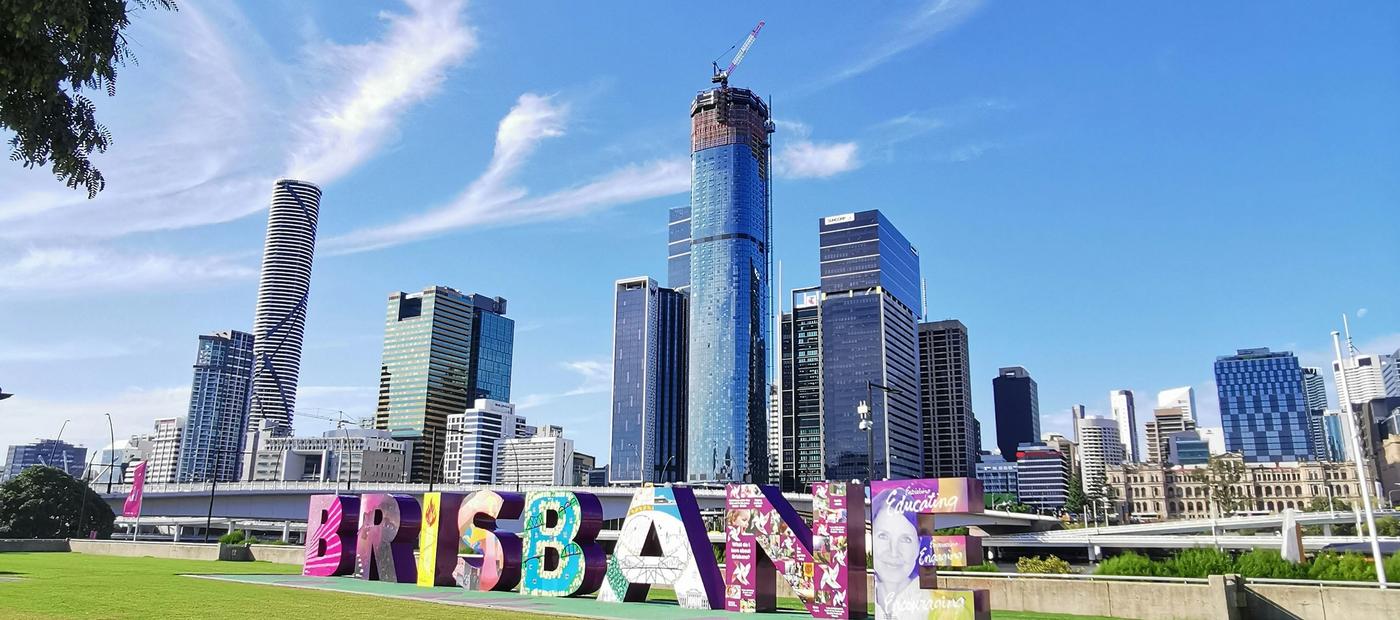
Brisbane's auction clearance rate fell to 48.8% in the most recent reporting week — below 50% for the first time this cycle. National listings are rising. Consumer confidence is near record lows. The headlines are getting louder. Here is what the data actually says, and what it means for first-time investors right now.
After two years of near-uninterrupted growth, Brisbane's property market is showing its first genuine signs of moderation. Three consecutive RBA rate hikes in 2026, rising auction volumes, and softening clearance rates have combined to shift market conditions in a way that is worth understanding clearly rather than reacting to emotionally. The critical distinction — one that most media coverage misses — is between a market that is slowing and a market that is falling. The Brisbane data right now describes the former, not the latter.
This article breaks down every current signal — the auction data, the price trajectory, the rental market, and the stock conditions — so you can form an accurate picture of where Brisbane actually sits in May 2026.
Source: Cotality (CoreLogic) via OpenAgent Brisbane Property Market Report, SQM Research vacancy data, and CoreLogic auction clearance rate reporting — April to May 2026. Brisbane dwelling values rose 1.2% in April alone, with the median now sitting at $1,116,180 — up 19.7% annually.
The auction data — what it is actually telling you
The most discussed number in Brisbane property right now is the 48.8% auction clearance rate recorded in the most recent reporting week. A result below 50% is technically buyer-favourable territory — it means more than half the properties taken to auction did not sell on the day. In the same week, 40 properties were passed in from 86 auctions, suggesting vendors and buyers are having difficulty agreeing on price at the auction stage.
That number needs significant context before you interpret it. Brisbane's April 2026 average clearance rate was 56.6% — meaningfully higher than the single week reading of 48.8%. The week-to-week volatility in auction data is significant and a single week below 50% does not establish a trend. Clearance rates in Brisbane's mid-60s range in March 2026 were reflecting unusually strong conditions — the current readings are a normalisation more than a collapse.
Across the capital cities, the picture is mixed. Adelaide is consistently recording clearance rates above 70% — the strongest auction market in the country. Brisbane and Canberra are delivering mid-range results. Sydney and Melbourne are showing the weakest conditions, with Sydney recording 48.8% and Melbourne 52.3% in the week ending 12 April — both markets more exposed to rate sensitivity than Brisbane given their higher price bases and greater concentration of leveraged buyers.
| City | Clearance Rate (Week ending 12 Apr) | Clearance Rate (April avg) | Direction |
|---|---|---|---|
| Adelaide | 66.4% | 70%+ | ↑ Strongest market |
| Brisbane | 58.1% | 56.6% | → Moderating |
| Canberra | 62.9% | ~60% | → Stable |
| Melbourne | 52.3% | ~55% | ↓ Softening |
| Sydney | 48.8% | ~50% | ↓ Most exposed |
| National combined | 52.7% | 57.3% | ↓ Easing |
Source: CoreLogic (Cotality) auction results via Square Real Estate weekly market update (17 April 2026). The Brisbane figure of 58.1% for the week ending 12 April compares favourably with Sydney and Melbourne and sits comfortably in the range that analysts describe as balanced rather than buyer-dominated or seller-dominated territory.
Two signals that are cooling — and three that are not
Auction clearance softening
Clearance rates have moved from the high 60s in early 2026 to the mid-50s in April and a single week below 50% in May. Buyers are conducting more due diligence, avoiding emotional bidding, and increasingly negotiating after auction rather than competing under the hammer. Vendors who overprice are being passed in.
Consumer confidence near record lows
ANZ-Roy Morgan Australian Consumer Confidence is near a record low following three consecutive RBA hikes. Low consumer confidence reduces discretionary spending and sidelines some prospective buyers temporarily — particularly first-time buyers who are more sensitive to sentiment than experienced investors.
Values still rising — +1.2% in April
Brisbane dwelling values rose 1.2% in April 2026 alone — a full month's growth — and 19.7% over the year to April. Values are not falling. The pace of growth is moderating from the extraordinary rates of late 2025, but the direction remains positive and well above any other major capital city.
Vacancy rate tightened to 0.8%
Brisbane's vacancy rate actually tightened from 0.9% a year ago to 0.8% in April 2026 — the market became more constrained, not less. Annual rent growth of 6.7% matches Perth as the equal-highest of any major capital. The rental market is not responding to rate hikes the way the sales market is.
Stock remains 13.7% below year-ago levels
Total listings in Brisbane fell 13.7% year on year in April 2026. Supply is constrained. New listings are edging higher but the total pool of available properties remains thin — a condition that has supported price growth and is likely to continue doing so while demand holds.
The top growth suburbs right now — where is the strength concentrated?
Cotality's April 2026 data shows Brisbane's strongest annual price gains concentrated in the southern and south-western corridors. The top two SA3 regions by annual growth are Beaudesert at 25.4% with a median of $959,256, and Springwood-Kingston at 24.8% with a median of $956,216. Both sit in the Logan corridor where buyers are drawn by accessible prices relative to inner Brisbane. This is consistent with the broader national trend where the lower quartile of the market has been outperforming the upper quartile.
The concentration of growth in more affordable, outer-ring suburbs is a direct consequence of the rate environment. As borrowing capacity compresses, buyers move down the price ladder into segments where competition is strongest. This dynamic is supporting outer-ring Brisbane while putting more pressure on the premium end of the market — the reverse of how the 2021 to 2023 cycle played out when the upper quartile led the upswing.
Cotality head of research Gerard Burg noted that higher interest rates could further deflect demand into lower-value segments of the housing market, where policy support for first home buyers has seen much more competition and continued growth in home values. For first-time investors targeting sub-$900,000 price points in Brisbane, that observation is directly relevant — the segment they are most likely buying in is experiencing more sustained demand than the premium end.
Private treaty is replacing auction as the dominant sales method
One of the most significant shifts in Brisbane's current market is not in the price data — it is in the sales method data. Across all capital cities, private sales are now clearly outnumbering auction results. In Queensland this is particularly pronounced, with buyers and sellers increasingly preferring negotiated sales over the competitive pressure of auction. This shift matters because it changes how you approach a purchase.
In a private treaty environment, due diligence matters more and timing pressure matters less. Vendors who cannot sell at auction are more likely to accept offers, negotiate on price or conditions, and allow longer settlement periods. Buyers who arrive at a private treaty negotiation with pre-approved finance, a clear sense of comparable sales, and realistic expectations are in a genuinely stronger position than they were twelve months ago when the auction environment gave all the leverage to the seller.
The shift from a seller's auction environment to a more negotiated private treaty market is not bad news for first-time investors — it is an opportunity. Properties that were selling above asking price at competitive auctions six months ago are now being negotiated at or below asking price in some segments. The key is having your finance pre-approved and your comparable sales research done so you can move with confidence when a well-priced property appears.
The suburbs where this opportunity is most available are the upper end of the Brisbane market — $1.5 million and above — where borrowing capacity constraints are biting hardest. In the sub-$900,000 segment where most first-time investors operate, competition remains strong and clearance rates are holding better than the headline figures suggest.
The honest assessment — slowing is not falling
Brisbane's property market is adjusting. That is not the same as declining. The combination of three consecutive rate hikes, reduced consumer confidence, and rising auction volumes is creating more balanced conditions than the extraordinary seller's market of late 2025. That balance is healthy and sustainable. A market where vendors cannot pass in properties at any price and buyers have no negotiating power is not normal — what is returning is closer to normal.
The structural case for Brisbane remains entirely intact. The vacancy rate is tightening not loosening. Annual values are up 19.7%. Listings are 13.7% below year-ago levels. The top growth suburbs are recording 24% to 25% annual gains. ANZ still forecasts Brisbane to grow 9.7% in 2026 — the strongest capital city forecast of any major bank despite the rate environment. The current moderation in auction clearance rates is a weather event, not a climate change.
Adjusting, not declining — conditions are improving for buyers
Brisbane's market is entering a more balanced phase after two years of exceptional seller-side strength. Clearance rates are moderating, buyers have more negotiating leverage than they did six months ago, and the pace of price growth is slowing from extraordinary to strong. None of this constitutes a falling market. The vacancy rate tightening to 0.8%, annual growth of 19.7%, and stock levels 13.7% below year-ago figures all point to a market with genuine structural support. For first-time investors, the current environment offers something the 2024 to 2025 market did not — the ability to negotiate, conduct proper due diligence, and enter at a price that reflects reality rather than auction-day emotion.
General information only. This article does not constitute financial, legal, or investment advice. Always consult a licensed financial adviser or mortgage broker before making investment decisions.
Partner with PropTalk
PropTalk is an independent property investment content site built specifically for first-time investors in Brisbane and South East Queensland. We are in early growth phase and looking to establish a small number of trusted broker and buyers agent partnerships from the ground up — so our readers have quality professional recommendations from day one.