RBA raises cash rate to 4.35% — what the May 2026 hike means for Brisbane property investors
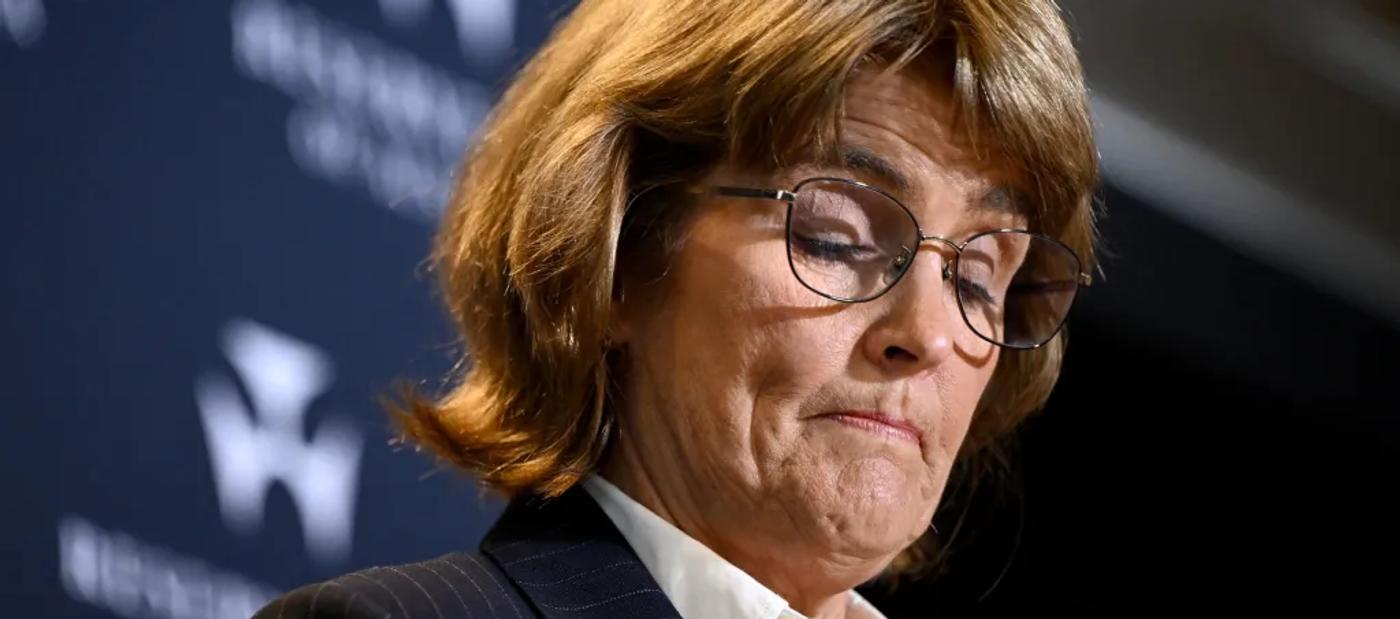
RBA lifts cash rate 25bp to 4.35%
The Reserve Bank of Australia lifted the cash rate by 25 basis points to 4.35% at its May board meeting — the third consecutive hike in 2026. The decision was passed 8 votes to 1. The new rate takes effect from 6 May 2026 and represents the highest cash rate since late 2011. Variable rate borrowers should expect lenders to pass on the increase within 24 to 48 hours.
Three consecutive hikes in 2026. The cash rate now sits at 4.35% — the highest level since late 2011 — driven by inflation rising to 4.6% and fuel price pressures from the Middle East conflict. Here is what it means for Brisbane investors right now and what to do about it.
The RBA's May decision was widely anticipated. Thirty of thirty-three economists surveyed by Reuters had forecast the move, and market pricing was running at approximately 75% probability of a hike following the March quarter CPI result of 4.6% headline inflation. Despite the expectation, the cumulative impact of three back-to-back increases is significant for anyone holding or planning to buy investment property in Brisbane this year.
Why the RBA hiked again — the inflation story
The RBA's statement identified two separate inflation pressures driving the decision. The first was domestic — capacity pressures building within the Australian economy that were already pushing prices higher before the international situation changed. The ABS March quarter CPI showed headline inflation jumping from 3.7% in February to 4.6%, with housing costs up 6.5% year on year and electricity up 25%.
The second was global — the ongoing Middle East conflict has driven oil prices sharply higher, adding directly to fuel and transport costs across the economy. The RBA flagged that these higher energy costs are already feeding into broader price increases for goods and services — what economists call second-round effects. RBA Deputy Governor Andrew Hauser described the combination of elevated inflation and limited supply capacity as raising genuine stagflation risks if energy shocks persist.
The vote of 8-1 — compared to a split of 5-4 at the March meeting — signals that the board has become more unified in its view that further tightening was necessary. That greater consensus is notable because it removes some of the ambiguity around the forward path that the March split created.
What it means for your repayments — the cumulative picture
Viewed in isolation, a single 25 basis point increase looks manageable. Viewed cumulatively — three consecutive hikes in 2026 totalling 75 basis points since January — the impact on investment property cash flow is meaningful. The table below shows what the three 2026 hikes combined have added to annual repayments across different loan sizes.
| Loan size | Extra per month (May hike) | Extra per year (May hike) | Total extra per year (all 3 hikes) |
|---|---|---|---|
| $500,000 | +$76 | +$912 | +$2,736 |
| $600,000 | +$91 | +$1,092 | +$3,265 |
| $700,000 | +$106 | +$1,272 | +$3,540 |
| $800,000 | +$121 | +$1,452 | +$4,356 |
| $1,000,000 | +$152 | +$1,824 | +$5,441 |
Source: Smart Property Investment analysis, JMD Mortgages (May 2026). On a $600,000 investment loan — roughly the amount required to purchase a Brisbane unit at 80% LVR at the current $750,000 entry price — the three 2026 hikes have added $3,265 per year in repayments. That is approximately $63 per week of additional holding cost compared to where rates started in January.
According to JMD Mortgages, today's increase adds approximately $91 per month to a $600,000 mortgage with 25 years remaining — bringing the combined impact of the three 2026 hikes to an extra $272 per month for that borrower. On a $700,000 loan the cumulative impact reaches $295 more per month, or $3,540 per year. Source: JMD Mortgages, May 2026.
What the major banks are forecasting from here
The most important signal from the May decision was the RBA's forward guidance — or more precisely, the deliberate absence of it. Rather than flagging further hikes, the board noted that monetary policy is now "well placed to respond to developments" — language that CBA economists interpreted as signalling a pause rather than pre-committing to further increases. The next significant data points are the May labour force figures due mid-June and the June quarter CPI due late July. The June board meeting on 15 to 16 June is live but not a foregone conclusion.
The CAMA RBA Shadow Board — a group of academic economists who make their own independent rate recommendations — put a 70% probability on rates needing to go higher over the next six months. That is a meaningful signal that the hiking cycle may not be definitively over even if the RBA pauses in June.
What this means for Brisbane property specifically
Despite three consecutive hikes in 2026, national dwelling values are still up 9.9% year on year. Brisbane's own growth — 19.1% annually to March 2026 — reflects a market where the supply imbalance is winning the tug of war with the rate cycle. Cotality's head of research Gerard Burg acknowledged that the latest tightening will likely further dampen housing demand, but noted that higher rates tend to deflect demand into lower value segments of the market rather than collapsing values broadly.
For Brisbane investors, that observation is important. Each 0.25% rate increase reduces borrowing capacity by approximately $12,000 to $25,000 depending on income level. Three hikes combined have taken roughly $36,000 to $75,000 out of a typical investor's borrowing capacity since January. That compresses the market of eligible buyers — but it does not change the supply equation. Brisbane needs 14,000 new dwellings per year and is completing a fraction of that. The structural undersupply that drives Brisbane's rental market and capital growth does not respond to interest rate decisions.
Brisbane's vacancy rate remains at approximately 0.9% — well below the 3% balanced market threshold. Rents rose 8.5% in the year to March 2026. Even with higher holding costs from the rate hikes, the rental income environment has improved to partially offset the impact. For investors already holding Brisbane property, the rising rent is doing some of the heavy lifting that the rate increases are threatening to undo.
The borrowing capacity impact — what it means for your next purchase
The most direct practical consequence of three consecutive hikes in 2026 is compressed borrowing capacity. APRA requires lenders to assess serviceability at the loan rate plus a 3% buffer — meaning the effective assessment rate on a new investment loan today is approximately 9.9% to 10.4% before any lender-specific adjustments. That buffer was always conservative, but at the current cash rate level it means investors are being assessed on a scenario that no major bank actually forecasts materialising.
For investors who had pre-approval from earlier in 2026, it is worth going back to your broker and confirming whether that pre-approval still holds at the current rate. In some cases lenders will require a new assessment before proceeding to purchase. Do not assume an older pre-approval is still valid without checking.
First — check whether your lender has announced its rate increase timing. Most major banks are applying the increase between 15 and 22 May 2026. Know when your repayments will change and make sure your cash buffer can absorb it. Second — if you are in the process of securing a purchase, contact your mortgage broker immediately to confirm your pre-approval is still valid at the new rate. Third — if you have not reviewed your rate in the past six months, ask your broker whether refinancing to a more competitive rate could offset part or all of the May increase. With three hikes baked in, lenders are still competing hard for refinancing business.
Should Brisbane investors still be buying in this environment?
The rate environment has unambiguously tightened. That is real and the holding cost impact is real. But the question for investors is not whether conditions have tightened — they clearly have. The question is whether the long-term investment fundamentals in Brisbane have changed. They have not. Population growth continues. Supply completions remain well below what is needed. Rental demand is structurally supported. And Brisbane's median property values are still rising despite three consecutive rate hikes.
The investors who have historically made the best returns in Brisbane are the ones who bought during periods of uncertainty rather than waiting for conditions to be perfect. Perfect conditions do not exist — they are always either rates too high, prices too high, or uncertainty too great. The structural case for Brisbane property is unchanged. The rate environment makes the holding cost harder. It does not make the long-term outcome worse for a well-chosen, well-located property held for a decade or more.
General information only. This article does not constitute financial, legal, or investment advice. Always consult a licensed financial adviser or mortgage broker before making investment decisions.
Partner with PropTalk
PropTalk is an independent property investment content site built specifically for first-time investors in Brisbane and South East Queensland. We are in early growth phase and looking to establish a small number of trusted broker and buyers agent partnerships from the ground up — so our readers have quality professional recommendations from day one.