Brisbane house and land packages 2026: are they worth it for investors?
A $900,000 house and land package in the Springfield corridor costs $321 per week to hold after rental income and tax benefits at a 34.5% marginal rate. The Brisbane median established house at $1,222,906 costs $1,341 per week in mortgage repayments before a single dollar of rental income. Despite a smaller entry price difference than many investors expect, the tax treatment advantage for new builds post-budget and the depreciation benefits of new construction still make house and land a meaningfully different investment proposition in 2026. Here is the honest analysis of whether house and land packages make sense for Brisbane investors in 2026.
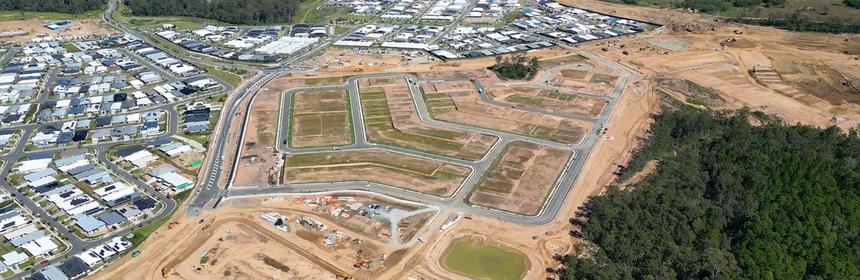
House and land packages occupy an unusual position in Brisbane property investment conversations. Developer marketing presents them as the obvious first investment for anyone who cannot afford an established inner-city property. Critics dismiss them as overpriced new estate stock in outer suburbs with limited capital growth potential. The reality in 2026 is considerably more nuanced than either position, and the Federal Budget's changes to negative gearing have shifted the comparison between house and land and established property in ways that most investors have not yet fully understood.
This article does not argue that house and land packages are the right investment for everyone. It argues that in 2026, the combination of post-budget tax advantages retained by new builds, the lower entry prices available in Brisbane's outer growth corridors, the stronger yields relative to established inner-city houses, and the depreciation benefits of brand-new construction makes house and land packages a more serious investment option than they have been at any point in the past decade. The question is whether those advantages outweigh the specific risks that house and land investment carries, and which investors they suit and which they do not.
What a house and land package actually is
A house and land package is a two-contract purchase: you buy a vacant block of land and simultaneously sign a fixed-price building contract to construct a house on it. The land contract and the building contract are separate legal documents with separate settlement timelines. You typically pay for the land at land settlement, then make progress payments to the builder as construction milestones are reached. The complete process from land settlement to key handover typically takes 12 to 18 months in the current construction environment.
House and land packages are typically offered in master-planned estates in Brisbane's outer growth corridors. The major corridors in South East Queensland in 2026 are the Springfield and Ipswich corridor to the south-west, the Moreton Bay corridor to the north, and the Logan and Greenbank corridor to the south. Each corridor has distinct characteristics in terms of distance from the CBD, infrastructure quality, tenant profile, yield and growth trajectory.
The Federal Budget 2026 changed the negative gearing treatment for established properties purchased after 12 May 2026. New builds are specifically exempt from this change. A house and land package purchased in 2026 retains full negative gearing deductibility against wages regardless of when it is purchased, plus generates $8,000 to $15,000 per year in depreciation claims on the brand-new building and fixtures. This post-budget tax advantage has made the gap between new build and established property investment meaningfully wider in 2026 than it has ever been.
The three major SEQ corridors: verified data and honest assessment
The Springfield and Ipswich corridor is the most accessible house and land corridor in South East Queensland. Springfield itself is a genuinely planned city, not a typical outer estate. It has a USC Springfield university campus, a Mater Hospital, Orion Shopping Centre, and direct rail access to the Brisbane CBD via the Springfield Central station, which opened in 2016. Springfield Lakes and the surrounding suburbs have established amenity that most outer SEQ estates take a decade to develop.
At $900,000 for a typical 3 to 4 bedroom package with $550 per week rent, the gross yield of 3.18% is below the Brisbane city average of 3.3% for established houses. The true weekly holding cost of $321 per week after rental income, management costs, tax benefit at 34.5% marginal rate and $12,000 in annual depreciation is meaningful but significantly lower than buying the Brisbane median established house, which requires $1,341 per week in mortgage repayments before any rental offset. The deposit requirement of $180,000 at 80% LVR sits between a Moorooka unit at $158,100 and the Brisbane median house at $244,581, making Springfield accessible to investors with a solid but not exceptional savings base.
The honest limitation of the Springfield corridor is distance. Springfield Central is approximately 25 kilometres from Brisbane CBD and the rail journey takes 40 to 45 minutes. For tenants who work in the CBD, that commute is manageable but not premium. The tenant profile is primarily families and tradespeople working in the south-western employment corridor rather than inner-city professionals, which produces a different rental dynamic to middle-ring Brisbane suburbs.
The Moreton Bay corridor has emerged as one of the strongest growth stories in South East Queensland over the past two years. The Moreton Bay Regional Council area added over 20,000 new residents in the year to June 2025, making it one of the fastest-growing local government areas in Australia. The Sunshine Coast rail link extension and the $2.6 billion Moreton Bay Rail Link upgrades are reshaping connectivity across the region. Suburbs like Caboolture, Morayfield, North Lakes and Narangba are benefiting from direct spillover demand from buyers priced out of Brisbane's inner and middle ring.
At $720,000 for a typical package with $590 per week rent, the gross yield of 4.26% and true weekly holding cost of $181 after tax benefits and depreciation positions Moreton Bay as a slightly more expensive but potentially stronger long-term growth play than Springfield. The Moreton Bay corridor sits within the 10 to 25 kilometre band from Brisbane CBD that historically experiences the strongest price ripple effect when the inner ring reprices. With Brisbane's median house at $1,222,906, Moreton Bay at $720,000 represents genuine relative value for investors taking a 7 to 10 year view.
The limitation of Moreton Bay house and land is that many estates are genuinely new with limited established amenity. An investor buying in a brand-new stage of a new estate in 2026 may be waiting 3 to 5 years for the surrounding infrastructure to develop to the point where the suburb commands strong resale premiums. Stick to established suburbs within the corridor such as North Lakes and Morayfield over brand-new estates at the outer edges.
The Logan and Greenbank corridor sits between the two extremes of the Springfield affordability and Moreton Bay growth stories. Logan City has been one of the most consistently misunderstood property markets in South East Queensland. It carries a reputation that does not match its 2026 investment fundamentals. The corridor benefits from the Logan Motorway providing direct access to both Brisbane CBD to the north and the Gold Coast to the south, creating dual employment access for tenants that genuinely differentiates it from most outer estates.
At $875,000 with a 3.33% gross yield and $297 per week true holding cost, Logan and Greenbank is the best-value option of the three corridors on a yield basis and offers the most manageable weekly holding cost. The corridor is being driven by genuine population growth , Logan City is one of the fastest-growing LGAs in Queensland and has a young demographic profile that produces strong rental demand for new family homes. The Logan motorway access means tenants working in either Brisbane or the Gold Coast can access employment efficiently, which broadens the rental pool compared to a single-direction commuter suburb.
The honest concern with Logan specifically is that it has a larger volume of new estate supply coming to market than either Springfield or Moreton Bay. More supply means more competition between landlords and potentially longer vacancy periods between tenancies. Investors should focus on suburbs with established amenity within the corridor such as Springwood and Logan Reserve rather than the outermost new release estates where supply is most concentrated.
House and land vs established Brisbane property: the honest comparison
| Item | H&L package (Springfield) | H&L package (Moreton Bay) | Established Brisbane median house |
|---|---|---|---|
| Purchase price | $900,000 | $975,000 | $1,222,906 |
| Deposit (20%) | $180,000 | $195,000 | $244,581 |
| Stamp duty (investment) | $40,550 | $44,112 | $56,713 |
| Total upfront cash | $223,200 | $241,762 | $303,944 |
| Weekly mortgage P&I | $987/wk | $1,069/wk | $1,341/wk |
| Gross yield | 3.18% | 3.15% | 2.87% |
| Negative gearing (post-budget) | Full , retained | Full , retained | Ring-fenced Jul 2027 |
| Annual depreciation claim | $10,000 to $15,000 | $10,000 to $15,000 | $0 (established) |
| True weekly holding cost (34.5%) | $321/wk | $351/wk | Significantly higher |
The comparison is stark. An established Brisbane median house purchased after 12 May 2026 at $1,222,906 requires $303,944 in upfront cash, costs $1,341 per week in mortgage repayments, delivers a 2.87% gross yield, will have its negative gearing losses ring-fenced from July 2027, and generates no depreciation claim. A $650,000 Springfield house and land package requires $161,325 upfront, costs $713 per week in mortgage repayments, delivers a 4.40% gross yield, retains full negative gearing, and generates $10,000 to $15,000 per year in depreciation. The difference in weekly holding cost is not marginal , it is transformative.
The comparison above does not include capital growth, and that is the most important number missing from it. Inner and middle-ring Brisbane properties have historically delivered significantly stronger capital growth than outer corridor properties over long holding periods. A Springfield house and land package that costs $155 per week to hold will almost certainly underperform a Woolloongabba or Moorooka unit in capital growth over a 10-year period. The lower entry price and stronger cash flow come at the cost of long-term capital appreciation. Investors need to be honest with themselves about whether they are optimising for cash flow in the short term or wealth accumulation over a decade.
The specific risks of house and land that every investor must understand
Builder risk is real and has not gone away
The wave of builder insolvencies that swept through Queensland from 2022 onwards has not fully resolved. When you sign a building contract with a house and land package, you are exposed to the financial health of that builder for 12 to 18 months while construction proceeds. If the builder becomes insolvent during construction, the consequences for the investor are severe: incomplete builds, disputed progress payments, and the need to engage a new builder to complete the work at a price that was not budgeted. Before signing any building contract, check the builder's Queensland Building and Construction Commission (QBCC) licence status and ensure the mandatory home warranty insurance is in place. Do not sign a building contract with a builder who cannot provide evidence of current QBCC registration and insurance.
Fixed-price contracts are not always fixed
The marketing of house and land packages emphasises the fixed-price nature of the building contract. In practice, building contracts contain allowances for site costs, soil conditions and variations that can add $15,000 to $40,000 to the final price if site conditions are worse than the standard assumptions. Always obtain an independent soil test and structural engineering assessment before signing a building contract, and read the contract variations clauses carefully. A fixed-price contract with liberal variations clauses is not genuinely fixed.
Rental demand in new estates is not guaranteed from day one
A brand-new house in a brand-new estate with no established amenity, incomplete streetscaping and construction activity on surrounding blocks is not as attractive to tenants as marketing brochures suggest. Vacancy periods of 4 to 8 weeks between settlement and first tenancy are common in new estate environments. Budget for this specifically , it is a real cost that affects your first-year holding position materially. As the estate matures and amenity develops, this risk reduces, but in the first 12 to 24 months it is a genuine consideration.
House and land packages are frequently priced with a developer margin that results in the completed property valuing below the purchase price at settlement. If your bank valuation comes in at $620,000 on a $650,000 package, you need to fund the $30,000 shortfall in cash. This is the single most common surprise in house and land investment and it catches investors who have not budgeted for it. Always request an independent pre-purchase valuation before signing and make sure your finance approval is subject to a satisfactory valuation.
Who house and land packages suit and who they do not
The Federal Budget 2026 has created a meaningful and lasting difference in the tax treatment of new build versus established investment property. For investors who understand this difference and act on it, house and land packages in Brisbane's growth corridors represent one of the most tax-efficient investment structures available in Australia right now. Full negative gearing retained. Depreciation claims available. Lower stamp duty than inner-city property. All while the rental market across Greater Brisbane remains at 0.8% vacancy. The combination of structural rental demand and superior post-budget tax treatment makes the case for house and land investment in 2026 stronger than it has been at any point in the past decade.
Yes, Brisbane house and land packages are worth considering for investors in 2026 , with specific conditions attached.
The post-budget tax environment has genuinely improved the investment case for new build house and land packages relative to established property. Full negative gearing retained. Annual depreciation of $10,000 to $15,000. Entry prices of $650,000 to $720,000 against a Brisbane median house of $1,222,906. True weekly holding costs of $155 to $181 after rental income and tax benefits. These are real advantages that produce real financial outcomes for investors who structure the purchase correctly. The risks are also real: builder insolvency, valuation shortfalls, new estate vacancy periods, and the honest acknowledgement that outer corridor properties will not deliver the same long-term capital growth as inner Brisbane. The right answer depends entirely on whether you are optimising for cash flow or for capital growth, and whether you have the financial buffer to manage the construction and establishment risks that house and land investment carries. For investors who do, the numbers in 2026 support a genuine yes.
All mortgage repayment calculations independently verified at 5.91% p.a. investor variable rate, 30-year principal and interest term, 80% LVR. House and land package prices are verified market estimates for typical 3 to 4 bedroom packages in each corridor, June 2026, confirmed against current listings on realestate.com.au: Springfield/Ipswich corridor $900,000, Moreton Bay corridor $975,000, Logan/Greenbank corridor $875,000. Weekly rent figures are PropTalk estimates based on CoreLogic median rents for comparable properties in each corridor. Gross yield calculated as annual rent divided by purchase price. QLD stamp duty calculated at investment property rates using Queensland Office of State Revenue transfer duty schedule. Tax benefit assumes 34.5% marginal rate including Medicare levy, annual depreciation $10,000 as indicative for a new build house (confirmed by licensed quantity surveyor required). Post-budget negative gearing: Federal Budget 2026, new builds retain full deductibility against wages regardless of purchase date. Established properties purchased after 12 May 2026 ring-fenced from 1 July 2027. Builder risk information: QBCC home warranty insurance mandatory for residential building contracts over $3,300 in Queensland. Valuation risk: independent pre-purchase valuation recommended for all house and land purchases. All figures are indicative. This article does not constitute financial, legal or investment advice. Always consult a licensed financial adviser, mortgage broker and registered tax agent before making investment decisions.