How much deposit do you actually need for an investment property in Brisbane in 2026?
The standard answer is 20%. But 20% of Brisbane's median unit price is $175,295, and 20% of the median house is $244,581 before a single dollar of transaction costs. There are legitimate pathways to invest with 10% or even less using equity. This article breaks down exactly what each deposit size actually costs, what it buys you, and which option makes sense for your specific position.
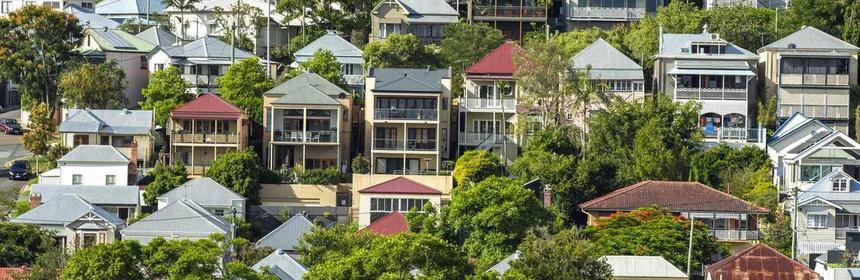
Most articles on investment property deposits give you the same answer: save 20% and avoid Lenders Mortgage Insurance. That advice is not wrong, but it is incomplete in a market where Brisbane's median unit has reached $876,474 and the median house is $1,222,906. At those prices, 20% is a significant savings target that puts the market out of reach for years for many investors. The question is not just how much deposit is required. It is how much deposit is required for each specific pathway, what the true total cost is at each level, and whether the cost of entering earlier with a smaller deposit is justified by Brisbane's growth trajectory.
This article answers all of those questions with verified calculations based on current Brisbane prices, current interest rates and current QLD stamp duty rates. Every figure is independently verified and calculated for investment property specifically, not owner-occupier property, because the deposit requirements, LMI costs and tax treatment differ meaningfully between the two.
The four deposit pathways available to Brisbane investors in 2026
The full cost picture: what you actually need to have ready at settlement
The deposit is only part of what you need at settlement. QLD stamp duty on investment property, conveyancing fees, building and pest inspections, and loan application costs all need to be funded on top of the deposit itself. These transaction costs are significant and are frequently underestimated by first-time investors who plan for the deposit but not for everything else.
QLD stamp duty for investment property uses the standard transfer duty rates with no first home buyer concession. The concession only applies to owner-occupied purchases. An investor buying a $750,000 unit in Brisbane pays approximately $33,425 in stamp duty. A first home buyer purchasing the same property to live in pays zero. This is one of the most significant financial distinctions between owner-occupied and investment purchasing in Queensland and it is not widely understood.
Full cost breakdown: Brisbane unit median at $876,474
| Cost item | 20% deposit | 10% deposit |
|---|---|---|
| Deposit amount | $175,295 | $87,647 |
| QLD stamp duty (investment) | $39,433 | $39,433 |
| LMI (investment, est. mid-range) | $0 | $14,199 |
| Conveyancing fees | $2,000 | $2,000 |
| Building and pest inspection | $650 | $650 |
| Total cash required at settlement | $217,378 | $143,929 |
Full cost breakdown: $750,000 Brisbane unit
| Cost item | 20% deposit | 10% deposit |
|---|---|---|
| Deposit amount | $150,000 | $75,000 |
| QLD stamp duty (investment) | $33,425 | $33,425 |
| LMI (investment, est. mid-range) | $0 | $12,150 |
| Conveyancing fees | $2,000 | $2,000 |
| Building and pest inspection | $650 | $650 |
| Total cash required at settlement | $186,075 | $123,225 |
The ongoing cost difference between deposit levels
A larger deposit does not just reduce upfront costs. It reduces your loan size and therefore your monthly repayments for the entire life of the loan. Understanding the ongoing cost difference between deposit levels is essential for modelling your true holding position at each scenario.
| Purchase price | Deposit (20%) | Loan | Monthly P&I | Annual repayment |
|---|---|---|---|---|
| $750,000 | $150,000 | $600,000 | $3,563 | $42,752 |
| $876,474 (unit median) | $175,295 | $701,179 | $4,163 | $49,961 |
| $900,000 | $180,000 | $720,000 | $4,275 | $51,302 |
| $1,222,906 (house median) | $244,581 | $978,325 | $5,809 | $69,709 |
| Purchase price | Deposit (10%) | Loan | Monthly P&I | LMI cost (est.) |
|---|---|---|---|---|
| $750,000 | $75,000 | $675,000 | $4,008 | $10,125 to $14,850 |
| $876,474 (unit median) | $87,647 | $788,827 | $4,684 | $11,832 to $17,354 |
| $900,000 | $90,000 | $810,000 | $4,810 | $12,150 to $17,820 |
| $1,222,906 (house median) | $122,291 | $1,100,615 | $6,535 | $16,509 to $24,214 |
The monthly repayment difference between a 20% and 10% deposit on a median Brisbane unit is approximately $521 per month, or $6,252 per year. Over a 30-year loan at 5.91% the difference in total interest paid is substantial. However, the investor who enters the market two years earlier with a 10% deposit and captures even 10% in capital growth on a $876,474 property gains approximately $87,647 in equity during those two years , more than the entire 10% deposit they put in. This is the core strategic question: is the LMI cost and higher repayment justified by the growth captured by entering earlier?
Unlike owner-occupier LMI which is not deductible, LMI on an investment property is fully tax deductible as a borrowing expense under ATO rules. It is claimed over the shorter of five years or the loan term , not all in year one. At a 34.5% marginal rate, a $14,000 LMI premium becomes an effective cost of approximately $9,170 after the tax deduction is applied over five years. This meaningfully reduces the true cost of a 10% deposit strategy for investors in the 34.5% or 39% tax bracket. Always confirm your specific position with a registered tax agent.
The equity pathway: using your existing property
For investors who already own a property, the equity access pathway bypasses the deposit question entirely. Rather than saving cash for a deposit, you draw on the equity built in your existing home and use it as security for the investment loan. This is how the majority of experienced property investors in Australia fund their second and third purchases.
How to calculate your usable equity
The formula is straightforward. Take the current market value of your existing property, multiply by 80%, and subtract your remaining loan balance. The result is your usable equity , the amount a lender will allow you to access without requiring LMI on the equity release.
| Item | Amount |
|---|---|
| Current property value | $900,000 |
| 80% of property value | $720,000 |
| Remaining loan balance | $350,000 |
| Usable equity available | $370,000 |
| This usable equity can fund | 20% deposit on a $1,480,000 purchase |
| Or alternatively | 20% on a $900K property plus all transaction costs |
The equity access pathway requires strong serviceability across both loans simultaneously. Your lender will assess your ability to service the existing loan plus the new investment loan at current rates with a 3% serviceability buffer applied on top. At current investor variable rates of 5.91%, the assessment rate is approximately 8.91%. This serviceability hurdle catches many investors off guard , the equity may be available but the income to service two loans at assessment rate may not be sufficient.
The single most common reason equity access strategies fail in 2026 is serviceability, not equity availability. Three RBA hikes in 2026 have raised the assessment rate to approximately 8.91%, which significantly reduces the maximum loan amount a lender will approve. Always confirm your serviceability position with a mortgage broker before committing to a purchase contract based on assumed equity access. Pre-approval must be confirmed before signing, not assumed.
What deposit size makes sense for each type of buyer
The question of how much deposit you need is secondary to the question of whether the property makes financial sense at current rates. A larger deposit reduces your repayments and improves your yield calculation, but the most important number is not the deposit , it is the weekly holding cost after rent at current rates. Model your specific property in the PropTalk yield calculator at 5.91% investor variable rate before deciding on deposit size. A 10% deposit on a property with strong yield may produce a better long-term outcome than a 20% deposit on a lower-yield property that requires years of additional saving.
The true cost of entering the Brisbane investment market ranges from $123,000 for a 10% deposit on a $750,000 unit to $305,000 for a 20% deposit on the median house. Equity access requires no cash at all if serviceability supports it.
There is no single right deposit size for every investor. A 20% deposit at $876,474 requires $217,378 in total cash at settlement and produces the lowest ongoing costs. A 10% deposit on the same property requires $143,929 and adds $11,800 to $17,400 in LMI that is partially recovered through tax deductions over five years. Equity access requires no cash if your existing property has sufficient usable equity and your income can service both loans at assessment rate. The right choice depends on your savings, your income, your existing property position, and whether the holding cost at current rates makes sense before any capital growth assumptions. Run the numbers on your specific situation before deciding , and confirm pre-approval before signing anything.
Deposit and repayment calculations: all figures independently calculated using a 5.91% annual investor variable rate (RBA May 2026 data), 30-year principal and interest loan term, and purchase prices based on Cotality Home Value Index April 2026 (unit median $876,474, house median $1,222,906). LMI estimates are indicative ranges based on typical Helia and QBE investment property premium schedules at 90% LVR as reported by Stanford Financial LMI Calculator (April 2026), LMI Waiver Australia (March 2026), and MoneyWiseCalc Australia (April 2026): investment property LMI is typically 10% to 20% above owner-occupier premiums. QLD stamp duty calculated using current Queensland Office of State Revenue transfer duty rates applicable to investment property with no first home buyer concession applied. Conveyancing and inspection costs are Brisbane market averages. LMI tax deductibility: ATO treats LMI as a borrowing expense deductible over the shorter of five years or the loan term under Tax Ruling TR 2000/2. Consult a registered tax agent for your specific position. All figures are indicative and for general information only. This article does not constitute financial, legal or tax advice. Always consult a licensed financial adviser, mortgage broker and registered tax agent before making investment decisions.