Is now a good time to buy property in Brisbane in 2026?
Brisbane dwelling values are up 19.7% annually and the median has reached $1,116,180. Three RBA rate hikes, a clearance rate below 50%, and the Federal Budget's negative gearing changes have fundamentally changed the investment calculation. The honest answer to this question depends entirely on who you are, what you are buying, and what you need the property to do.
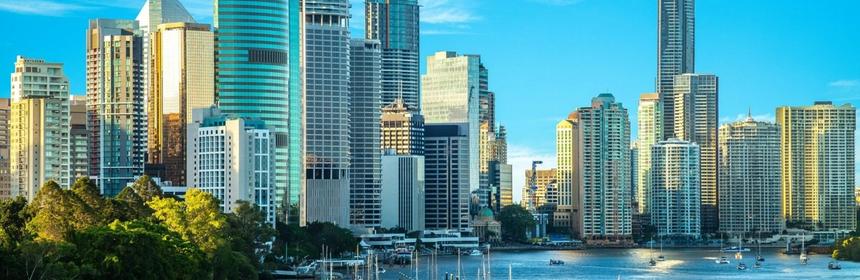
"Is now a good time to buy property in Brisbane?" is the most searched property question in Australia right now, and it deserves a better answer than the ones most sites provide. The optimistic answer is that Brisbane's fundamentals remain strong, vacancy is tight, population is growing, and the 2032 Olympics infrastructure is still being built. The pessimistic answer is that prices have risen 84% in five years, rates have gone up three times in 2026, and the clearance rate has dropped below 50%. Both of those answers are true simultaneously. Neither of them tells you what to do.
This article does not have a universal answer because there is not one. Whether now is a good time to buy in Brisbane depends on your deposit size, your income, your investment horizon, and specifically what type of property you are buying. What it does have is an honest assessment of every data point that matters, a clear framework for thinking through the decision, and a specific answer for each type of buyer in the current market.
What the data actually shows right now
The starting point is getting the numbers right, because a lot of commentary on Brisbane property is working from outdated figures. The Cotality Home Value Index for April 2026, released on 1 May 2026, is the most authoritative source available. Here is what it actually shows.
Brisbane's median dwelling value reached $1,116,180 in April 2026, up 1.2% for the month, 4.7% for the quarter, and 19.7% for the year. The median house value specifically reached $1,222,906, while the median unit value reached $876,474. Both are at record highs. The five-year growth of 84% and the ten-year growth of 119.5% are the highest of any Australian capital city over those periods.
| Market | Monthly change | Annual change | Vacancy rate | Direction |
|---|---|---|---|---|
| Brisbane | +1.2% | +19.7% | 0.8% | Growing, moderating |
| Perth | +2.1% | +26.0% | Tight | Growing, strong |
| Adelaide | +1.1% | +12.2% | Tight | Growing, steady |
| Sydney | -0.6% | +4.2% | Moderate | Declining |
| Melbourne | -0.6% | +2.0% | Moderate | Declining |
The national context matters. Sydney and Melbourne are both declining right now. Brisbane is still growing. That is not a trivial distinction for someone trying to decide where to deploy capital in 2026. The question is not whether Brisbane is the best place to buy in Australia. By the data, it currently is among the top two or three. The question is whether any time is the right time for a specific buyer at current prices and current rates.
The case for buying now
Supply is structurally insufficient and not improving quickly
Total advertised listings in Brisbane are running approximately 13.7% below year-ago levels. New listing volumes have risen 35.4% year on year, but the rate at which those listings are absorbed has kept total stock low. Brisbane homes are selling in 18 days on market on average, which is significantly faster than the national median of approximately 29 days. This is the clearest supply signal in the data. When stock is that tight and selling that fast, buyers are still competing rather than negotiating from a position of strength.
The structural reason supply is constrained is construction cost inflation and labour shortages that have slowed new dwelling completions well below the pace required to keep up with population growth. Greater Brisbane added 58,200 residents in 2024 to 2025, a 2.1% population growth rate that was second only to Perth nationally. Building approvals are not keeping pace with that growth. The imbalance between population growth and dwelling supply is a multi-year problem that will not resolve quickly regardless of what interest rates do.
The rental market at 0.8% vacancy provides a genuine yield floor
Brisbane's vacancy rate tightened to 0.8% in April 2026, matching Adelaide as the equal tightest rental market of any east-coast capital. Annual rent growth of 6.4% to 6.7% means rental income is growing meaningfully. For investors, this creates a genuine floor under holding costs. Even as mortgage repayments have risen with each RBA hike, rental income has also risen, partially offsetting the impact. An investor who purchased a Brisbane unit in 2024 is receiving materially more rental income today than they were at the time of purchase.
Bank forecasts still support further growth
Major banks forecast Brisbane price growth of 4% to 8% in 2026, with Westpac at 8% and CBA at a more conservative 4%. These forecasts were produced before or around the March 2026 rate decision, meaning they may not fully reflect the May hike. Even discounting the top end of the range, a market expected to grow 4% to 6% annually from a base of $1,116,180 represents a meaningful dollar gain per year on a property purchase. The question is whether that growth compensates for the cost of holding at current interest rates.
Brisbane's supply shortage and tight rental market mean that even if price growth moderates significantly, a sharp correction requires conditions that are not currently present in the data. For-sale listings would need to rise substantially above the five-year average. Vacancy rates would need to move above 2%. Days on market would need to extend well beyond 30 days. None of these conditions currently exist. The market is moderating, not collapsing.
The case for waiting
Affordability has reached a genuine constraint level
Brisbane's median house price of $1,222,906 combined with an investor variable rate of 5.91% produces a monthly principal and interest repayment of approximately $5,800 on an 80% LVR loan, before any ownership costs. At a gross rental yield of approximately 3.3% for houses, the annual rental income on a median Brisbane house is approximately $40,356 , a gross shortfall against mortgage repayments alone of around $29,244 per year before management, rates, insurance and maintenance. That is a significant cash flow burden in an environment where negative gearing on established property purchased after 12 May 2026 is ring-fenced from July 2027.
The lower quartile of the market is actually growing faster than the upper quartile right now, with lower-priced properties rising 6.4% over the quarter against 3.9% for the upper quartile. This confirms that affordability is the binding constraint: buyers are concentrating at the lower end of the price range because that is where borrowing capacity allows them to participate. This is a sign of a market under affordability stress, not a healthy broad-based expansion.
Three rate hikes in five months have materially changed borrowing capacity
The RBA raised rates in February, March and May 2026, taking the cash rate from 3.60% to 4.35% and fully reversing the three cuts delivered through 2025. Each 25 basis point rise reduces borrowing capacity by approximately $15,000 to $20,000 for a median income borrower. Three consecutive rises reduce borrowing capacity by $45,000 to $60,000. For buyers who were at the edge of their serviceability limit before these hikes, the market has moved beyond reach without an equivalent increase in income or deposit.
The RBA is expected to pause at its June 2026 meeting to assess the impact of the three 2026 hikes and monitor unemployment, which rose to 4.5% in April 2026, the highest since November 2021. A pause is not a cut. It simply means the rate is not rising further in the immediate term. Investors who are modelling rate cuts as a near-term assumption are taking a risk that the data does not currently support.
The Federal Budget has changed the post-purchase tax position
For established properties purchased after 12 May 2026, negative gearing losses will be ring-fenced to property income from 1 July 2027. This does not eliminate the investment case for established property, but it materially increases the true annual holding cost for buyers who were previously relying on the wage-offset benefit of negative gearing to manage cash flow. Any investor modelling their holding costs on the old negative gearing rules is working from an incorrect figure.
The for and against in plain terms
Who should and should not buy right now
The binary question of whether now is a good time to buy in Brisbane is less useful than asking whether now is a good time for a specific type of buyer with a specific budget and horizon. Here is the honest answer for each profile.
"Whether now is a good time to buy in Brisbane depends entirely on who you are and what you are buying. The market data supports a selective yes for some buyers and a clear no for others."
PropTalk Analysis, May 2026What to do if you decide to buy
Every significant moderation in Brisbane's property market has been followed by a resumption of growth. Investors who entered during the 2022 to 2023 softening period , when clearance rates were falling and sentiment was negative , captured the best entry prices of the recent cycle and have since seen extraordinary gains. A moderating market is not a reason to retreat. For prepared buyers with finance ready and clear criteria, it is the best buying environment in two years.
For new build unit buyers and long-term investors with strong fundamentals: yes, now is a good time. For buyers stretched to their limit targeting established houses at the median: not yet.
Brisbane's investment case in May 2026 is real but selective. The fundamentals that drive long-term property values , population growth, supply shortage, tight rental vacancy, infrastructure investment , remain intact and are not going away. The headwinds , three rate hikes, post-budget ring-fencing, affordability constraints, a clearance rate below 50% , are genuine and affect different buyers differently. The investor who buys a new build unit in Nundah, Kelvin Grove or Woolloongabba at a 4.5% to 5.2% yield in 2026, holds for 10 years, and does not require the investment to work perfectly from day one has a strong probability of a very good outcome. The buyer who purchases a median Brisbane house with a 3.3% yield at maximum borrowing capacity with no buffer for further rate rises is taking a risk that the current environment does not reward. Know which one you are before you act.
Data sources: Cotality Home Value Index April 2026 (released 1 May 2026): dwelling median $1,116,180, monthly growth 1.2%, quarterly 4.7%, annual 19.7%, house median $1,222,906, unit median $876,474, lower quartile quarterly growth 6.4%, upper quartile 3.9%; Smart Property Investment, Brisbane property market update April 2026 using Cotality data: unit median $876,474, house median $1,222,906, auction clearance average 55.18% in April; API Magazine, Brisbane prices still rising but slowing momentum signals investor turning point (May 2026): Cotality confirmed figures, clearance rate 48.8%, listings -13.7% year on year; Property Update, Australian Property Market Outlook 2026, May 26 2026: RBA cash rate hikes February, March and May 2026, unemployment 4.5% April 2026; NAB Brisbane Property Market Insights April 2026 using Cotality: median dwelling $1,116,180, annual dwelling sales 50,696, median days on market 18; Australian Property Experts, Brisbane property market 2026 (April 2026): 58,200 new residents 2024 to 2025, five-year growth figures; Bamboo Routes, Brisbane good time to buy analysis (January 2026): listings 20% below normal, 21-day selling time; Metropole, Brisbane housing market update (May 2026): bank forecasts 4% to 8% growth in 2026. All figures are indicative. This article is for general informational purposes only and does not constitute financial or investment advice. Always consult a licensed financial adviser before making investment decisions.