Brisbane 2032 Olympics and property investment: what it actually means for investors right now
The Brisbane 2032 Olympics is driving $7.1 billion in committed infrastructure across South East Queensland. Historical data from Sydney, Barcelona and London shows peak property gains consistently occur 3 to 5 years before the Games, not during or after. That window is open right now. Here is what the evidence actually says, which suburbs benefit most, and what investors need to understand before acting on the Olympic narrative.
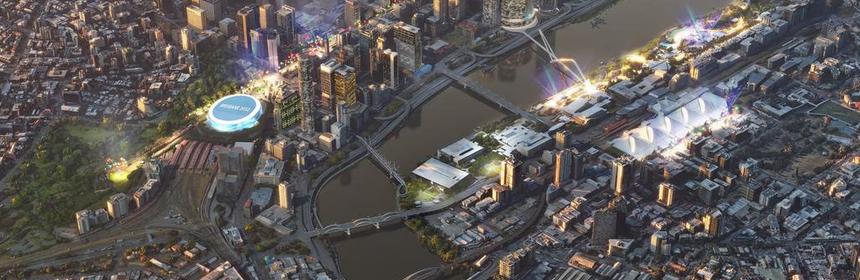
Every property investor in Brisbane is aware of the 2032 Olympics. It appears in every market report, every suburb profile, every buyers agent pitch. But awareness of the Olympics and a clear understanding of what it actually means for property investment decisions are two very different things. Most commentary on the topic falls into one of two traps: either uncritical hype that treats every suburb in Brisbane as an Olympic beneficiary, or reflexive scepticism that dismisses the infrastructure story entirely.
The evidence from previous host cities sits between these two positions. The Olympics does generate lasting property value uplift, but only in specific locations and only for investors who understand the mechanism driving the gains. The uplift is not about the event itself. It is about permanent infrastructure that changes the accessibility, amenity and desirability of specific suburbs in ways that outlast the Games by decades. Understanding which Brisbane suburbs have that infrastructure and which are simply riding the Olympic branding wave is the analysis this article provides.
What history actually tells us about Olympic property markets
The most instructive reference points for Brisbane are Sydney 2000, London 2012, and Barcelona 1992. Each delivered property gains in Olympic-adjacent suburbs, but the timing and mechanism differed meaningfully from the popular narrative that the Games itself drives prices.
Sydney 2000: the infrastructure was permanent, the gains were real
Sydney's Homebush Bay precinct was largely industrial wasteland before the Games. The infrastructure investment transformed the area permanently, and suburbs within the transport corridor to the Olympic precinct saw sustained long-term gains. But the gains were concentrated in suburbs where the transport infrastructure genuinely changed accessibility. Suburbs that benefited from narrative alone without infrastructure connection underperformed the Sydney average over the decade following the Games.
London 2012: East London transformation was structural
London's Olympic boroughs in East London had been chronically underinvested for decades before the Games. The Queen Elizabeth Olympic Park, Westfield Stratford City, and the extension of the Overground and DLR networks changed the suburb's connection to Central London permanently. Those boroughs outperformed both the London average and the national market in the decade following the Games. Critically, the gains were concentrated in suburbs where the infrastructure addressed a genuine pre-existing transport deficiency.
Property gains from the Olympics are not driven by the spectacle of the Games. They are driven by permanent infrastructure that changes the fundamental accessibility and liveability of specific suburbs. Suburbs that benefit from a new train station, a permanent precinct development, or a genuine improvement in transport connectivity see lasting value uplift. Suburbs that simply have Olympic marketing attached to them without underlying infrastructure change do not.
Brisbane's Olympic infrastructure: what is actually being built
Brisbane's Olympic footprint is deliberately different from past Games. Rather than concentrating everything in one precinct, Brisbane is hosting a distributed Games across multiple venues in Brisbane, the Gold Coast and the Sunshine Coast. This creates multiple investment corridors rather than a single hotspot, which is both an opportunity and a risk for investors who need to identify which corridors have genuine infrastructure substance.
Cross River Rail: the highest-impact infrastructure investment
Cross River Rail is the single most significant infrastructure investment connected to the Brisbane Olympics and it is already under construction. The project creates twin tunnels beneath the Brisbane River and CBD, with four new underground stations at Boggo Road, Woolloongabba, Albert Street and Roma Street. Properties within 800 metres of these new stations represent the clearest and most defensible infrastructure-driven investment case in Brisbane right now. The connection to the Olympics is real but secondary: these stations would be transformative for Brisbane with or without the Games.
Victoria Park stadium and the inner-north precinct
The new Victoria Park Stadium in Herston replaces the original Gabba plan and anchors the Olympic precinct in Brisbane's inner north. Suburbs surrounding Victoria Park including Spring Hill, Herston, Kelvin Grove and Bowen Hills will see direct uplift from stadium proximity and the associated precinct investment. The Spring Hill Aquatic Centre and Athletes Village in Bowen Hills, planned for conversion to long-term housing after the Games, add further density and permanence to the inner-north precinct.
Gabba redevelopment and the inner-south
The Gabba stadium itself is scheduled for demolition after the Games, with the site earmarked for urban renewal. Woolloongabba, East Brisbane and Kangaroo Point are positioned to benefit from the long-term redevelopment of the Gabba precinct into a major urban renewal project. This is not a short-term story. The redevelopment will play out across the 2030s. But investors who purchase now in these suburbs acquire exposure to both the Cross River Rail station uplift and the longer-term Gabba site transformation simultaneously.
South East Queensland transport investment
Beyond Brisbane, the Olympics is driving significant transport investment across the region. The Gold Coast is receiving light rail extensions and new stations at Hope Island and Pimpama. The Sunshine Coast is receiving rail duplication between Beerburrum and Nambour and Bruce Highway upgrades. A new Athletes Village at Maroochydore City Centre will convert to residential use after the Games. These projects address genuine transport bottlenecks that will benefit residents long after 2032.
The suburbs with genuine Olympic infrastructure exposure
The following suburbs have direct, verifiable connections to specific Olympic infrastructure projects. These are not suburbs that appear on speculative hotspot lists. They are suburbs where a specific piece of permanent infrastructure will change accessibility or amenity in a measurable way.
The timing question: when do the gains actually occur
The most practically important insight from historical Olympic host cities is the timing of property gains relative to the Games. The common assumption is that property prices rise most strongly during and after the event. The data consistently shows the opposite.
| City | Games year | Peak gain period | Post-Games performance | Key driver |
|---|---|---|---|---|
| Sydney | 2000 | 1996 to 2000 | Sustained in infrastructure corridors | Transport network and precinct |
| Barcelona | 1992 | 1988 to 1992 | Strong city-wide lasting uplift | Seafront accessibility and urban renewal |
| London | 2012 | 2008 to 2012 | East London boroughs outperformed for decade | Overground and DLR extensions |
| Athens | 2004 | Mixed results | Underperformed nationally | Infrastructure without lasting utility |
| Brisbane | 2032 | 2026 to 2030 projected | Unknown, fundamentals strong | Cross River Rail, stadiums, precinct |
"Historical data from Sydney, Barcelona and London shows peak capital gains typically occur 3 to 5 years before the Games. For Brisbane 2032, this suggests 2026 to 2028 represents the optimal entry window."
Property Investment Professionals Australia, 2026The mechanism is straightforward. Investors who anticipate the Games buy in the lead-up years. Construction activity brings workers and economic activity. Media attention raises profile. By the time the Games arrive, prices already reflect the Olympic premium. Investors who wait for the event to validate their thesis are typically buying at or near the peak of the Olympic-specific uplift cycle.
For Brisbane in 2026, this means the window is currently open. Six years out from the Games, infrastructure is under construction, venue decisions are confirmed, and suburb-level impacts are identifiable. The investor who purchases a well-selected unit in Woolloongabba or Kelvin Grove today is buying before the Olympic premium is fully priced in, on top of the already-strong fundamentals those suburbs have independent of the Games.
The honest risks investors need to understand
The Olympic property narrative in Brisbane has genuine substance but it also carries risks that deserve honest assessment. Three specific risks are worth understanding before making any investment decision based primarily on the Olympic story.
Oversupply risk in Athletes Village precincts. The conversion of Athletes Villages to residential use after the Games adds significant new housing supply to Bowen Hills specifically. In the short term post-Games period, rental yield in that specific precinct may soften as supply comes online. Investors should model holding costs through a potential yield compression period of 12 to 24 months post-2032.
The Athens cautionary tale. Athens 2004 is the Olympics that property investors rarely mention. Infrastructure built for the Games had limited lasting utility for residents. Without permanent transport improvement and genuine urban renewal, the Olympic premium evaporated quickly after 2004. Brisbane's infrastructure is permanent and functional, which distinguishes it from Athens, but investors should verify that any specific suburb they are considering has infrastructure with genuine lasting utility rather than Olympic-branded marketing.
Brisbane's growth may already reflect the Olympic premium. Brisbane dwelling values have risen 84% over five years. Part of that growth reflects genuine supply and demand fundamentals. Part of it may already reflect the Olympic premium. Investors need to assess whether the price they are paying today already prices in the Olympic infrastructure uplift, or whether genuine additional uplift remains to be captured.
How to invest in the Olympic story intelligently
What separates Brisbane 2032 from less successful Olympic host cities is that the infrastructure being built serves Brisbane's long-term needs independently of the Games. Cross River Rail was a planning priority before the Olympics were awarded. The Victoria Park precinct addresses a genuine inner-city stadium deficit. Brisbane is not building for the Games and hoping the infrastructure finds lasting use. It is building infrastructure Brisbane needs and hosting the Games alongside that programme. This distinction is what makes the investment case structurally sound rather than speculative.
The Olympic infrastructure story is real and the entry window is open. But the gains go to suburbs with genuine infrastructure, not Olympic branding. Woolloongabba, Kelvin Grove, Herston, Bowen Hills, Spring Hill and East Brisbane have the substance. Most of the rest have the marketing.
Brisbane 2032 is a legitimate long-term property investment catalyst, not speculative hype. The $7.1 billion in committed infrastructure is permanent, functional and already under construction. Historical patterns from Sydney, Barcelona and London confirm that the optimal entry period is 3 to 5 years before the Games, which places 2026 to 2028 as the window most investors should be focused on. The suburbs that will benefit most are those where specific, verifiable infrastructure changes accessibility and amenity in lasting ways. The investor who selects well, buys with sound current-rate fundamentals, and holds for 7 to 10 years is positioned to capture both the structural Brisbane growth story and the Olympic infrastructure premium on top of it. The investor who buys a suburb because it appears on an Olympics hotspot list without specific infrastructure support is taking a different and less defensible bet.
Sources: Property Investment Professionals Australia, Brisbane 2032 Olympics property investment analysis (February 2026); Property Update, Brisbane 2032 Olympics infrastructure and property impact analysis (April 2026, May 2026); CBRE Research, Brisbane 2032 Olympic Games economic and property impact report (2025); Adviseable.com.au, The Olympic Effect analysis of host city property performance (September 2025); Queensland Government, Olympic and Paralympic Games infrastructure announcements and venue plans (2025, 2026); Smart Property Investment, Olympic boom SEQ suburbs analysis (August 2025); Hunter Gather, Brisbane 2032 Olympics property price impact analysis (2025); Cotality Monthly Housing Chart Pack, Brisbane dwelling values and market data (May 2026). All figures are indicative based on publicly available data at the date of publication. Property investment involves significant risks. This article is for general informational purposes only and does not constitute financial or investment advice. Always consult a licensed financial adviser before making investment decisions.