Rentvesting in Brisbane 2026: how to get into the property market without buying where you live
Renting a two-bedroom apartment in New Farm at $725 per week while owning a new build investment unit in Moorooka costs approximately $994 per week all-in — almost exactly the same as buying in New Farm directly at $987 per week in mortgage repayments, but with $27,000 less required upfront and a growth asset building equity in your name from day one. That is the rentvesting calculation in Brisbane in 2026. Note: all tax benefit figures assume a new build investment property with full negative gearing and depreciation retained under post-budget rules. Established property figures will differ.
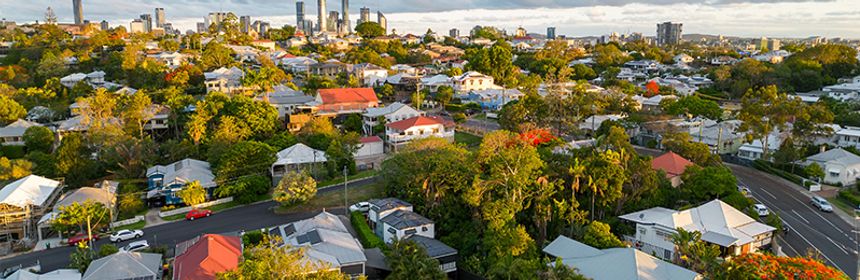
Rentvesting is not a new concept but it has become one of the most practically relevant property strategies for Brisbane residents in 2026. The premise is straightforward: you rent the home you want to live in, in the suburb and style that suits your life, while simultaneously purchasing an investment property in a location where your money works harder. You do not sacrifice your lifestyle to get on the property ladder. You do not wait years to save a deposit large enough to buy in your preferred suburb. You enter the market sooner, in a location where the yield and growth fundamentals are stronger, and you build equity while continuing to live exactly where you want.
In Brisbane in 2026, rentvesting makes more mathematical sense than it ever has. The gap between where young professionals want to live — New Farm, West End, Teneriffe, Paddington — and where the investment numbers actually work has never been wider. Inner-Brisbane lifestyle suburbs command median prices of $1.5 million to $2.5 million for houses with yields of 2% to 3%. Middle-ring suburbs like Moorooka, Nundah and Taringa offer unit entry points between $650,000 and $800,000 with yields of 4% to 5% and verifiable annual growth above 20%. For a young professional earning a good income and renting in the inner suburbs, rentvesting into the middle ring is a more financially sound decision than waiting to buy where they live.
What rentvesting actually means
Rentvesting means renting a home in the location that suits your lifestyle while purchasing an investment property in a more affordable area that offers strong rental yields and capital growth potential. The rental income from the investment property offsets a portion of your mortgage repayments, tax deductions reduce your holding cost further, and the property builds equity through capital growth over time. Meanwhile you continue renting where you actually want to live, paying market rent rather than the premium mortgage repayments that buying there would require.
The strategy has become increasingly common among Australians aged 25 to 40 who are priced out of their preferred suburbs but not priced out of the property market entirely. It is not a consolation prize for people who cannot afford to buy where they live. It is a deliberate financial strategy that in many cases produces better long-term wealth outcomes than buying in an expensive suburb with a compressed yield.
Rentvesting is not the same as simply choosing not to buy. The rentvestor is simultaneously a renter and a property owner. They are building equity in an asset that generates rental income, captures capital growth, and produces tax deductions — all while maintaining the lifestyle flexibility that renting in their preferred suburb provides. The wealth building is happening whether they are sitting in their rented New Farm apartment or not.
The verified Brisbane numbers: rentvesting vs buying directly
The most useful way to evaluate rentvesting is to compare it directly to the alternative — buying in the suburb you actually want to live in. The following comparison uses verified current figures for Brisbane in June 2026. The rentvesting scenario involves renting a two-bedroom apartment in New Farm while purchasing an investment unit in Moorooka. The direct purchase scenario involves buying a two-bedroom apartment in New Farm directly.
| Item | Rentvesting scenario | Buy in New Farm directly |
|---|---|---|
| Where you live | Rent in New Farm, 2BR | Own in New Farm, 2BR |
| Property purchased | Moorooka unit, $790,500 | New Farm unit, $900,000 |
| Deposit required (20%) | $157,500 | $180,000 |
| Stamp duty | $35,206 (investment rate) | $0 (FHB concession) |
| Conveyancing and inspection | $2,650 | $2,650 |
| Total upfront cash required | $195,356 | $182,650 |
| Weekly rent paid | $725/wk (New Farm) | $0 (own the property) |
| Weekly mortgage repayment | $864/wk (Moorooka loan) | $987/wk (New Farm loan) |
| Weekly rental income received | +$575/wk (from tenant) | $0 |
| Rates and insurance | -$201/wk (avg) | $109/wk |
| Weekly tax benefit (34.5%, new build assumed) | +$222/wk | $0 (PPOR not deductible) |
| True total weekly outgoing | $992/wk | $1,096/wk |
The headline finding is striking. The total weekly outgoing for the rentvesting scenario — rent paid in New Farm plus the net holding cost of the Moorooka investment after rental income and tax benefits — is $992 per week. Buying in New Farm directly costs $987 per week in mortgage repayments alone, before any ownership costs are added. The two paths cost almost exactly the same per week to run.
The critical difference is what you get for that weekly outgoing. The direct buyer in New Farm is building equity in a $900,000 property with a gross yield of approximately 3.3%, no tax deductions on mortgage interest, and the full $180,000 deposit plus costs committed to a single asset. The rentvestor is building equity in a $790,500 new build unit in Moorooka growing at 25.3% annually, receiving a 4.02% gross yield, claiming full tax deductions on mortgage interest and $8,000 in annual depreciation — both retained in full as a new build under post-budget rules. The $222 per week tax benefit figure in the table above applies specifically to a new build investment property. An established Moorooka unit purchased after 12 May 2026 would not include the depreciation claim and the negative gearing loss would be ring-fenced from July 2027, reducing the weekly tax benefit materially. The PropTalk yield calculator in new build mode will show your specific position.
The rentvesting scenario in this comparison requires $35,206 in Queensland stamp duty because the Moorooka unit is purchased as an investment, not as a primary residence. A first home buyer purchasing directly in New Farm pays zero stamp duty under Queensland's first home buyer concession for properties under $700,000, or a concessional rate for properties between $700,000 and $800,000. This means the direct purchase scenario requires $12,706 less in upfront cash than rentvesting in this comparison, even though the direct purchase deposit is $22,500 higher. This stamp duty trade-off is the most significant upfront financial disadvantage of rentvesting and is worth weighing carefully against the long-term advantages.
The Brisbane suburbs that make the best rentvesting targets
Not every Brisbane suburb works as a rentvesting target. The investment property needs to tick three specific boxes simultaneously: affordable enough that the deposit is achievable, yielding enough that rental income meaningfully offsets the mortgage, and growing strongly enough that equity builds at a meaningful pace. The following suburbs all meet that standard with verified June 2026 data.
| Suburb | Property type | Median price | Annual growth | Gross yield | Deposit (20%) | Why it works |
|---|---|---|---|---|---|---|
| Moorooka | Unit | $790,500 | +25.3% | 3.78% | $158,100 | Gentrifying, 8km CBD, rail access |
| Nundah | Unit | $790,000 | +21.6% | 4.82% | $158,000 | Strongest yield in guide, airport line |
| Woolloongabba | Unit | $772,500 | +11.78% | 4.84% | $154,500 | Cross River Rail, Gabba precinct |
| Oxley | Unit | $830,000 | +21.5% | 3.44% | $166,000 | Ipswich line, large blocks, family belt |
Taringa is the entry point worth noting specifically. At $650,000 median unit price with a 4.6% gross yield and an 18.4% annual growth rate, Taringa offers the lowest deposit requirement of the five suburbs — $130,000 at 80% LVR — while still delivering meaningful yield and growth. The University of Queensland corridor provides permanent rental demand from students and academics that does not disappear during economic downturns. For a first-time rentvestor with a $150,000 to $170,000 in savings, Taringa is the most accessible entry point into the Brisbane investment market.
The pros and cons of rentvesting that most articles skip
The post-budget rentvesting position
The Federal Budget 2026 changes to negative gearing have a specific implication for rentvestors that is worth understanding clearly. For rentvestors purchasing a new build investment property, nothing has changed. Full negative gearing against wages is retained. The depreciation claim on a new build of $8,000 to $15,000 per year is fully deductible. The tax efficiency of the strategy is unchanged.
For rentvestors purchasing an established investment property after 12 May 2026, negative gearing losses are ring-fenced to property income from 1 July 2027. This does not eliminate the tax benefit of rentvesting on established property — it reduces it. Instead of being able to offset a $25,000 annual loss against wages at 34.5%, earning a $8,625 tax refund, an established property rentvestor from July 2027 can only claim that loss against rental income from other investment properties. If they have only one investment property, that loss carries forward rather than producing an immediate cash refund.
New build investment properties are the superior rentvesting vehicle in 2026. They retain full negative gearing, generate significant depreciation claims, and are entering the market at a moment when new construction is near its lowest level in a decade. For a rentvestor choosing between an established unit and a new build unit at a similar price point, the post-budget tax position makes the new build significantly more tax efficient from July 2027 onwards. Run both scenarios through the PropTalk yield calculator before deciding.
How to make rentvesting work: a practical framework
"The rentvestor who buys a Nundah unit at 25, captures 5% annual yield and 20% capital growth for three years, and uses the equity to buy their first home at 28 is in a fundamentally different financial position to someone who spent those three years saving."
PropTalk Analysis, June 2026When rentvesting does not make sense
Rentvesting is not the right strategy for every Brisbane resident. There are specific situations where direct purchase, even at a lower quality location or property type, is the more sensible financial decision.
If you are eligible for the Queensland First Home Owner Grant and the first home buyer stamp duty concession, and you can find a property you are genuinely happy to live in within the eligible price range, buying as a first home buyer and living in the property is likely to produce a better net outcome than rentvesting. The stamp duty concession alone is worth $35,000 to $40,000 on a typical Brisbane investment purchase. That is a significant advantage to preserve if you can.
If your rent where you currently live is materially lower than the holding cost of an investment property you could buy — for example, if you are living in a share house at $350 per week — then the financial case for rentvesting weakens considerably. The strategy works best when the rent you pay where you live is high enough that the alternative of buying there would be very expensive, making the gap between lifestyle rent and investment holding cost a reasonable trade-off.
If you genuinely need the emotional security and permanence of home ownership — the ability to renovate, keep pets, know you will not receive a notice to vacate — rentvesting may not suit you regardless of the financial case. The strategy requires being comfortable as a renter for an extended period, and that is not a comfortable position for everyone.
The most frequently seen error among Brisbane rentvestors is choosing an investment property based on what they would personally enjoy living in rather than what the data supports as the strongest financial position. Your investment property is not your home. It is a business asset. The tenant's preferences and the suburb's investment fundamentals matter far more than your personal aesthetic preferences. A two-bedroom unit in Nundah with strong yield and rail access will outperform a three-bedroom house in a suburb you prefer aesthetically but which offers lower yield and slower growth.
For Brisbane residents earning above $100,000 who are renting in premium inner suburbs, rentvesting is one of the most financially compelling property strategies available in 2026.
The numbers in this article are not theoretical. Renting a two-bedroom apartment in New Farm at $725 per week while owning a new build unit in Moorooka costs $992 per week all-in — $5 per week more than buying in New Farm directly, with $12,706 more in upfront cash due to stamp duty, but with 25.3% annual growth in the investment suburb, a 4.02% gross yield, full negative gearing retained as a new build, and the lifestyle freedom that renting in a premium suburb provides. The rentvestor who executes this strategy cleanly — targeting the right suburb, maintaining their financial buffer, and using the equity to fund a future owner-occupied purchase — is likely to be in a materially stronger financial position in five years than someone who waited to buy in the suburb they actually wanted to live in. The strategy requires discipline, a clear plan, and a willingness to view property as a financial instrument rather than a lifestyle choice. But in Brisbane in 2026, the data firmly supports it.
All calculations independently verified using current data. Purchase price, annual growth and gross yield for Moorooka units: realestate.com.au May 2026 (unit median $787,500, annual growth 25.3%). Weekly rent for Moorooka unit ($575/wk): CoreLogic via YIP. New Farm 2BR rental: PropTalk estimate based on Domain and realestate.com.au Brisbane inner north rental data June 2026, typical range $700 to $750/wk, $725 used as midpoint. New Farm unit purchase price ($900,000): indicative market estimate for 2BR unit, June 2026. Mortgage repayments: calculated at 5.91% p.a. investor variable rate, 30 years principal and interest, 80% LVR. Stamp duty: Queensland Office of State Revenue investment property rates (no first home buyer concession). First home buyer stamp duty concession: QLD OSR, full concession on properties under $700,000, reduced concession $700,000 to $800,000, no concession above $800,000. Tax benefit: 34.5% marginal rate including Medicare levy, depreciation $8,000 per year as new build. APRA serviceability: up to 80% of rental income can offset investment loan serviceability assessment. Post-budget negative gearing: Federal Budget 2026, established properties purchased after 12 May 2026 ring-fenced from 1 July 2027. New builds retain full deductibility. Nundah yield 5.02%, annual growth 21.6%: CoreLogic via YIP. Woolloongabba yield 4.81%, annual growth 11.78%: CoreLogic via YIP. Taringa yield 4.6%: CoreLogic via YIP estimate. Oxley units $825,000, annual growth 21.5%: realestate.com.au May 2026. This article is for general informational purposes only and does not constitute financial, tax or investment advice. Always consult a licensed financial adviser, mortgage broker and registered tax agent before making investment decisions.